

Australian Outback Road Trip: 11-Day Adelaide to Darwin Itinerary
Going on a road trip through the Australian Outback is one of those experiences you don't forget. Driving for hours along endless desert roads, surrounded by red earth and nothing but the vast landscape around you, all to end up watching the sunrise over Uluru… It’s definitely one of my most unforgettable adventures in Australia.
Travelling through the desert is something you have to prepare for, specially when covering such big distances. In this guide I'll show you what you need to take into consideration when planning a roadtrip
Here you’ll find a sample itinerary from Adelaide to Darwin (the same I did) covering the most incredible places in Central Australia, along with recommendations for campsites and places to stay, everything you need to prepare for a desert adventure, an idea of how much it costs, and a map with all the main points of interest.
And as an extra, I’ve put together a downloadable image with a checklist of things to see and do on an Australian desert road trip, so you can tick them off as you go. You’re going to cover a loooot of kilometres, so a little extra motivation never hurts!
CROSSING THE AUSTRALIAN DESERT
There are around 3,600 kilometres between Adelaide and Darwin via the most direct route. You’re literally travelling from one end of the country to the other! It’s undoubtedly a great adventure, but you need to be properly prepared for crossing the desert and making the most of the journey.
THE BEST TIME TO TRAVEL THROUGH CENTRAL AUSTRALIA
Australia is huge, and a road trip through its centre means covering a lot of kilometres. As you make your way from Adelaide to Darwin, you’ll cross several different climate zones, so the time of year you choose can make a big difference to the experience.
Central Australia is pretty much all desert, with daytime temperatures reaching over 40°C in summer, while winter nights can be very cold. That’s why it’s important to choose the right time of year for this trip. In general, the main recommendation is to avoid summer. Not just because of the heat, but also because of the flies! They can turn your experience into a real nightmare.
Autumn and spring are generally the best options, when temperatures are much milder.
The Adelaide area, in the south of Australia, has a temperate climate that is more Mediterranean in character. The four seasons are clearly defined, although it’s worth remembering that Australia is in the Southern Hemisphere, so winter runs from June to September and Christmas takes place in summer.
Darwin, on the other hand, is in Australia’s tropical north. It’s hot all year round, but there are two very distinct seasons: the wet season, which coincides with the Australian summer, and the dry season, which falls during winter and is much more pleasant.
I did this trip in the second half of May, and it was perfect. Travelling from south to north at that time of year also turned out to be a great decision, as I gradually left the cooler weather behind in Adelaide and made my way towards much warmer temperatures. And I ended the trip with a pool party in Darwin!
PREPARING FOR AN OUTBACK ROADTRIP
You’ll be spending several days far away from civilisation. You might come across a town every 200 kilometres or so, but for the most part, there’ll be a whole lot of nothing. So you need to be prepared!
Create a very long playlist and download it before you go. And throw in a few audiobooks and podcasts too.
Download the Google Maps area so you can use it offline. There’s not much chance of getting lost anyway — the road is pretty much a straight line!
Find out where you can camp using my guide to free camping in Australia.
Get a 20-litre jerry can to carry extra fuel in case of emergencies.
Get your car checked by a mechanic before the trip and make sure everything is in good condition. Mechanics will be few and far between, and a tow truck can be very expensive.
Make sure you have roadside assistance cover that includes long-distance towing. I had mine with RAC.
Plan your grocery shopping for several days at a time, as supermarkets are few and far between — and expensive — between Port Augusta and Katherine.
Get a gas camping stove if you don’t already have one. You can find them at Kmart, bUNNINGS, outdoor stores or on Facebook Marketplace.
Download CamperMate (free app) or WikiCamps (paid) to find campsites, camping areas, public toilets, drinking water and more.
Pack a fly net or head net, which can come in handy around Uluru and the surrounding area.
Check out my guide to dangerous Australian animals you might encounter and find out what to do if you come across them.
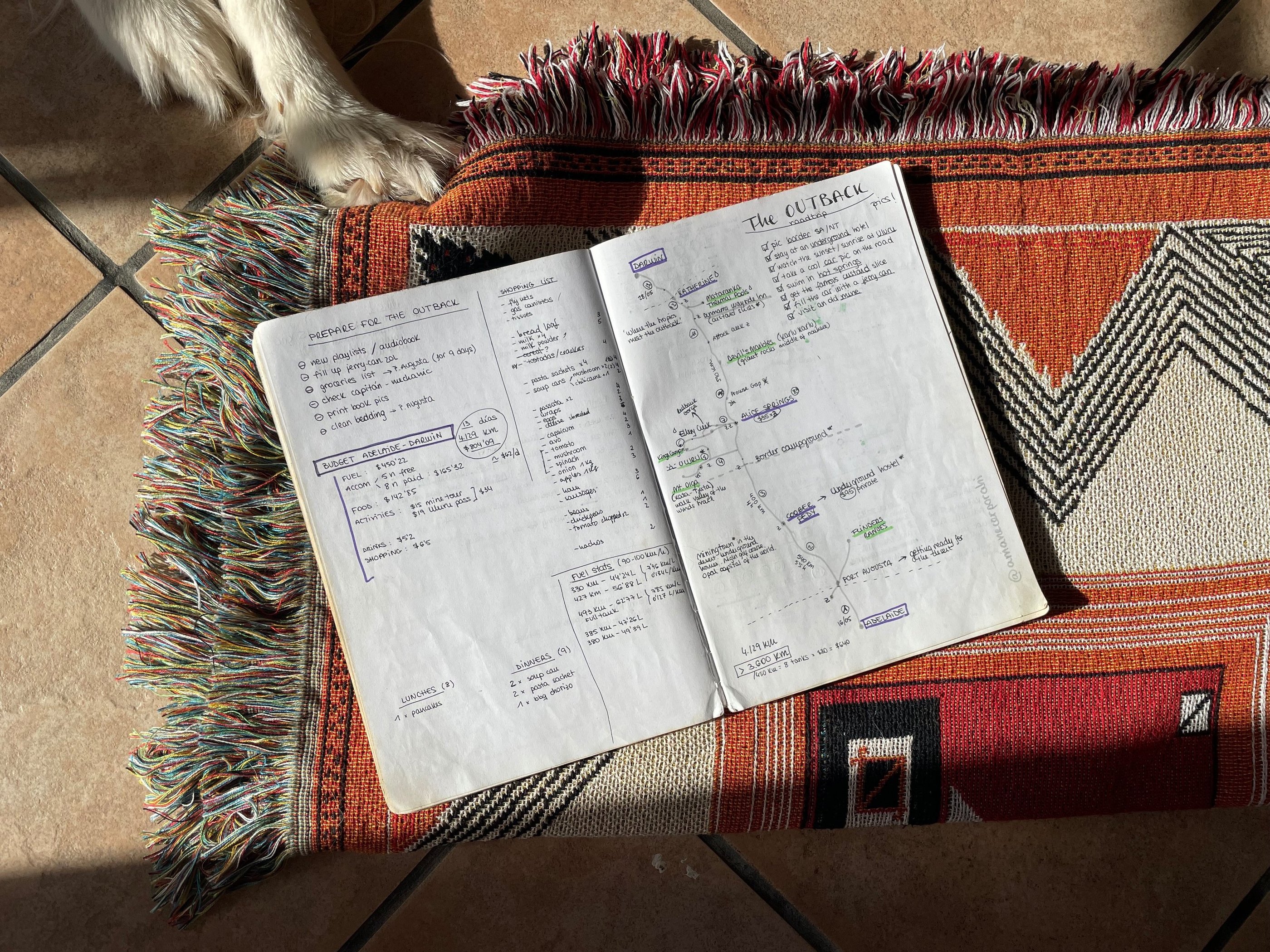
Planning the road trip in my travel notebook
11-DAY OUTBACK ROADTRIP ITINERARY
Here’s the itinerary I followed on my 11-day road trip through the Outback, crossing Australia from south to north — from the cool autumn weather of Adelaide all the way to the tropical heat of Darwin.
Of course, you can do the same route in the opposite direction. For each leg of the journey, I’ve included where I stayed, whether it was a paid campsite ($), and the total number of kilometres I drove that day (yes, we kept track!).
Day 1: Leaving Adelaide
Adelaide to Chinaman Creek, 325 km
On the first day of the road trip, you have a very important mission: stock up on food and supplies, fill up the tank, and pick up anything else you might need for the journey. As you leave Adelaide and head towards Port Augusta, you could spend the night in the city or look for a campsite nearby.
Where to stay: I stayed at Chinaman Creek Campground, a campsite where I watched a beautiful sunset and saw an incredible starry sky — the first of many on this trip.
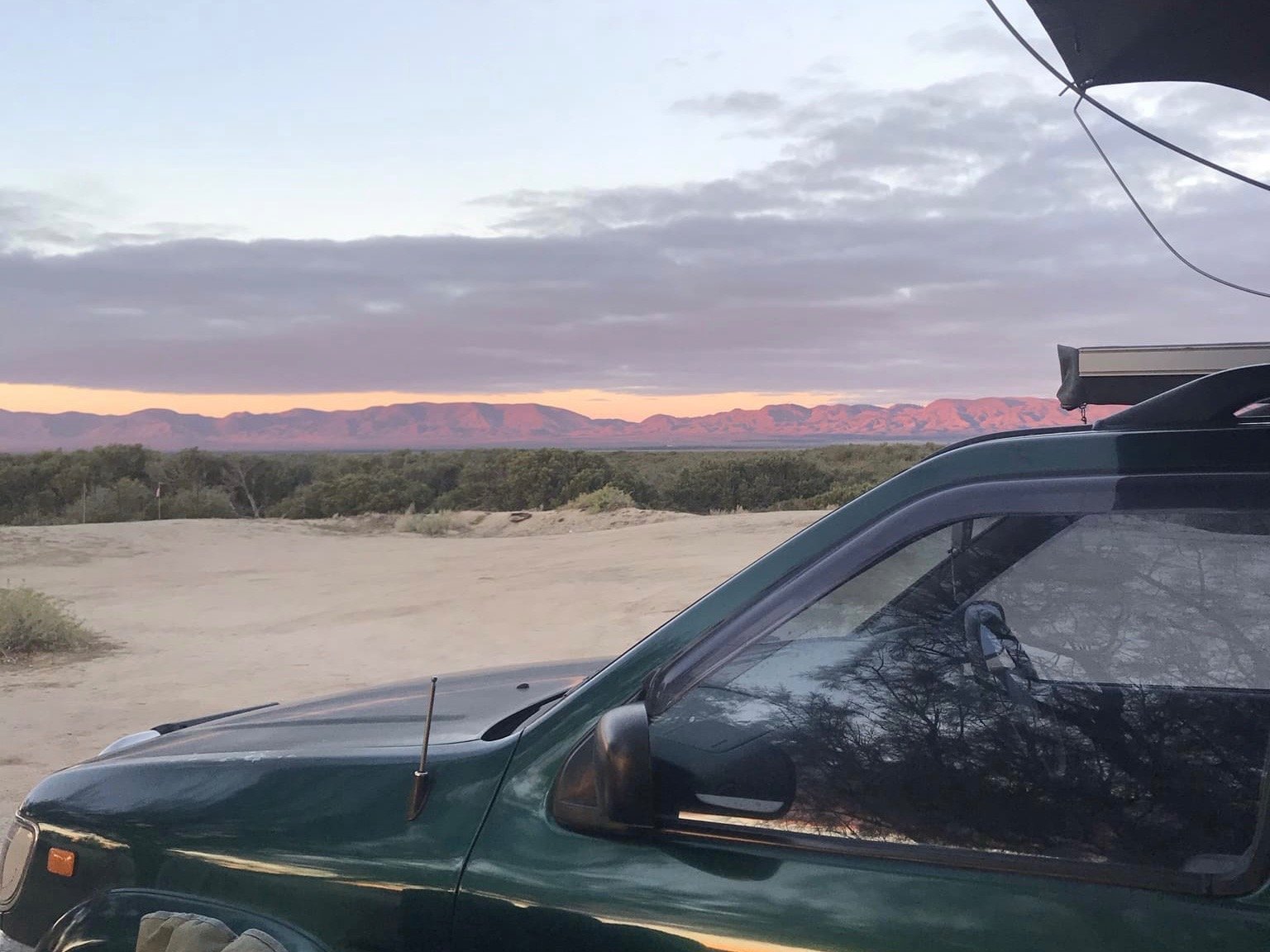
Chinaman Creek, with my first views of the Outback’s red hills
Day 2: Coober Pedy, an Underground Mining Town
Chinaman Creek to Coober Pedy ($$), 580 km
Port Augusta is the last major town before the Outback, and once you leave it behind, you’ll see the landscape changing before your eyes. Welcome to the desert!
Stopping in Coober Pedy is one of the most memorable parts of this trip. Known as the opal capital of the world, much of the town is built underground. It’s a fascinating and wonderfully quirky place, with old abandoned cars scattered around the streets, a spaceship and plenty of other unexpected sights.
Things to do in Coober Pedy:
Take a photo at the Coober Pedy entrance sign (it's cool).
Visit an old mine and learn about the opal mining process at Old Timers Mine & Museum. Admission was $15 when I visited, and I found it really interesting.
Wander around the streets and see what surprises you come across.
Find the famous “Spaceship.”
Watch the sunset from the top of the hill.
Stay in a Coober Pedy typical underground hotel.
Visit Crocodile Harry’s Underground Nest & Dugout, just outside Coober Pedy. The movie Mad Max was filmed here!
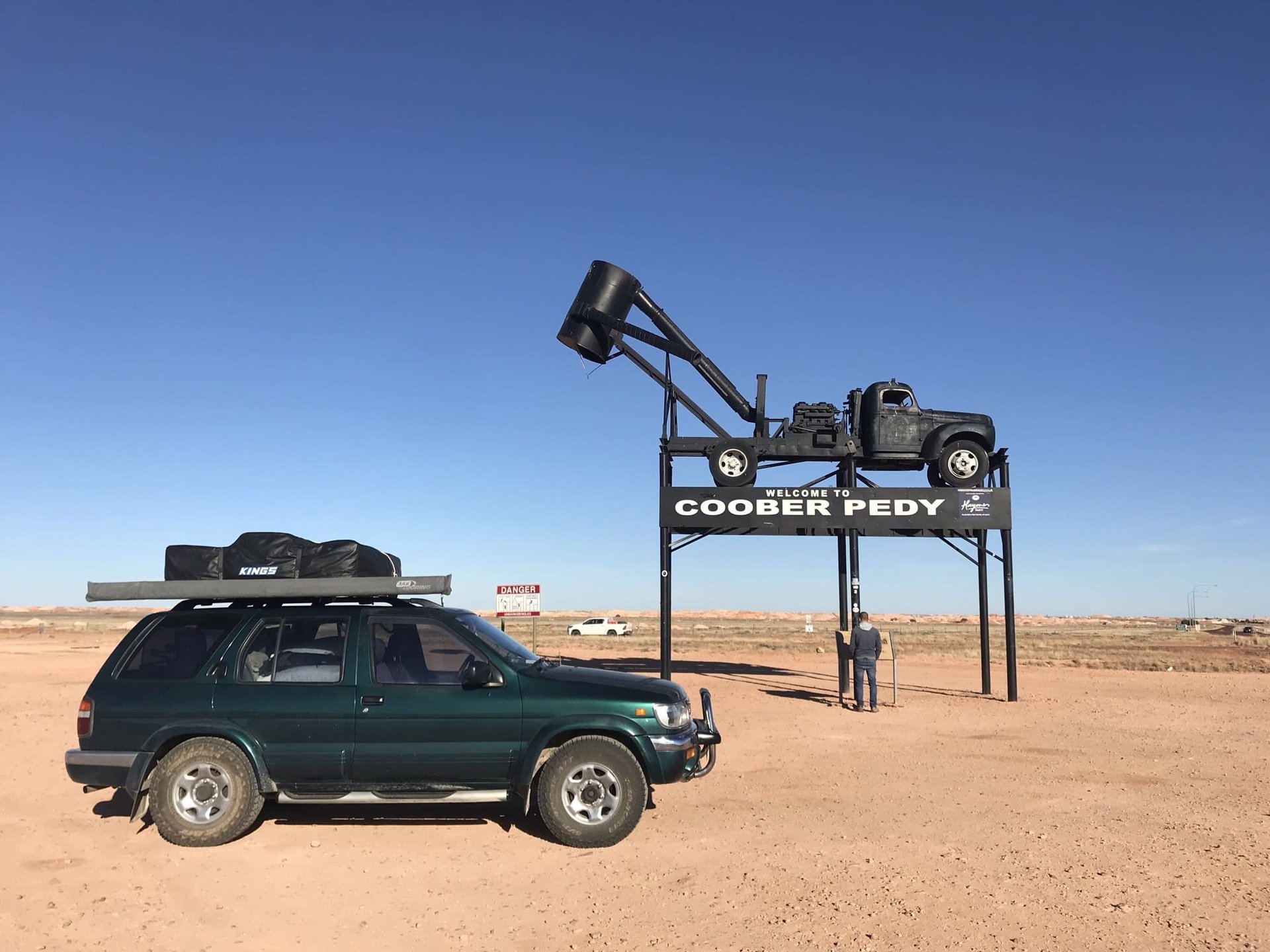
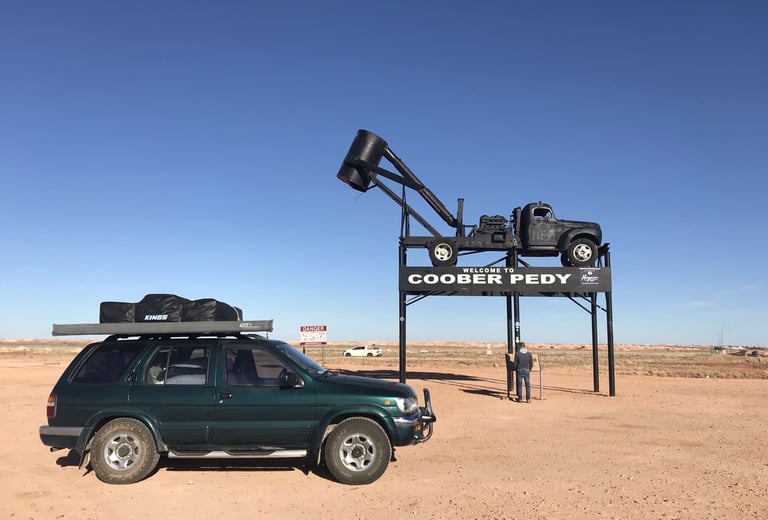
Mandatory picture with the Coober Pedy entrance sign!
Where to stay in Coober Pedy: We stayed in a private underground room at Radeka Downunder. They also had a hostel-style area, which we had a quick look around, and honestly, with the darkness and the underground walls, it was pretty creepy! But at the same time, it felt incredibly authentic. For me, sleeping underground is a must-do on your trip!
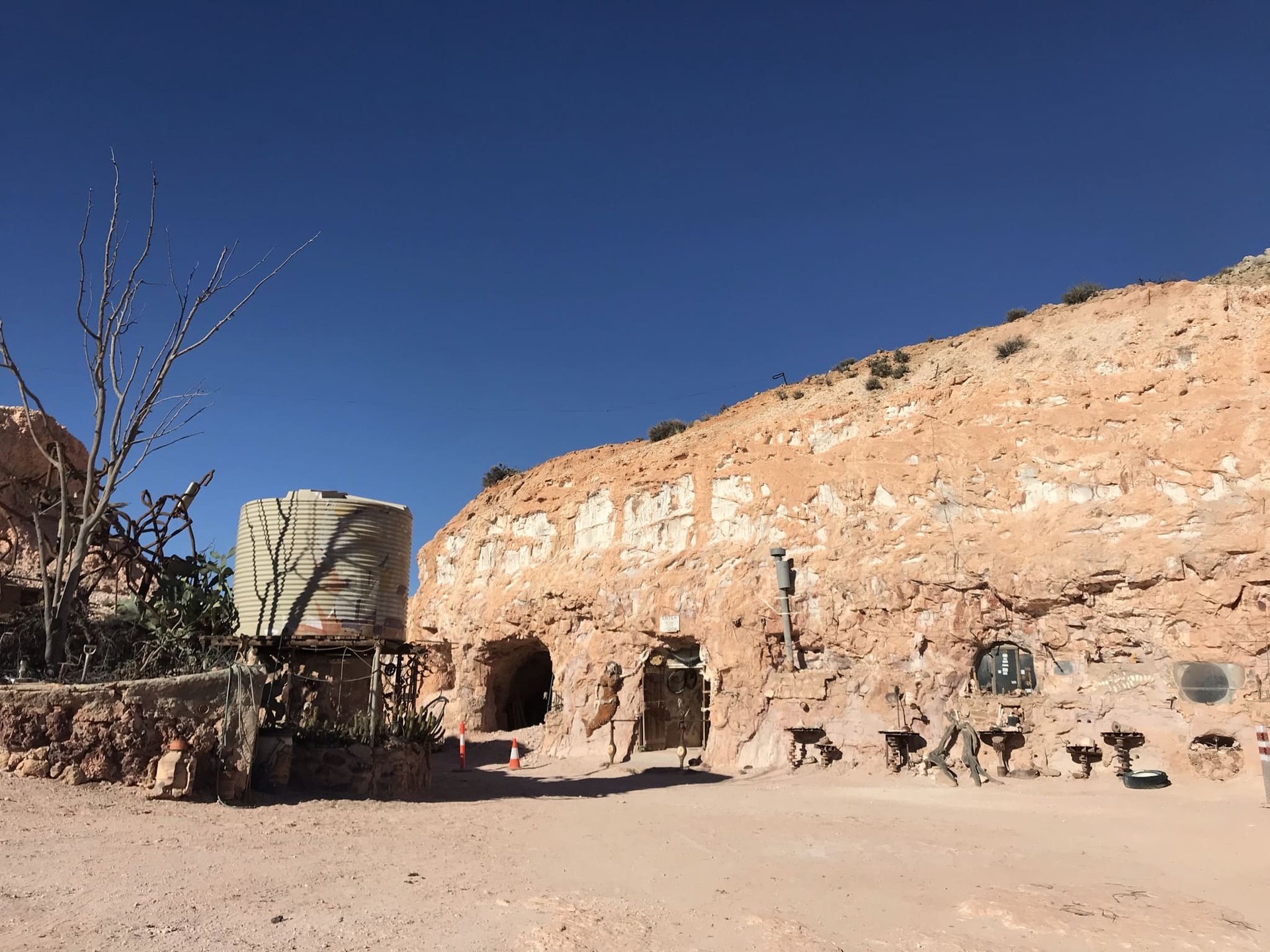
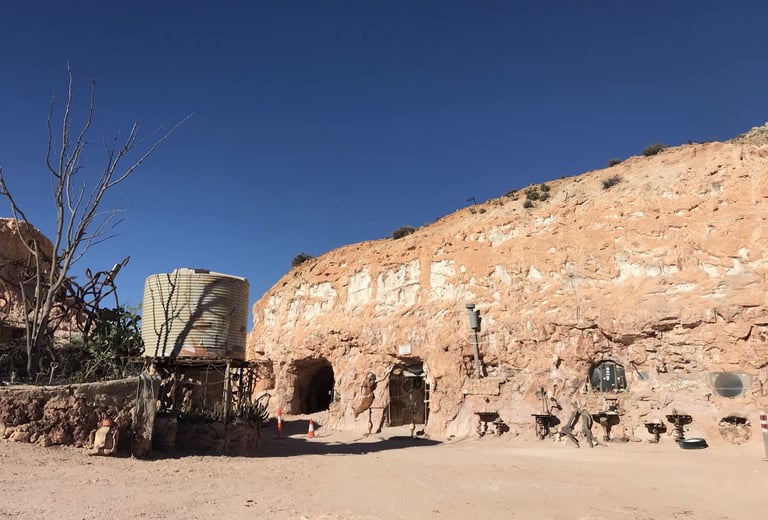
Underground dugout in Coober Pedy.
Day 3: Crossing the South Australia - Northern Territory Border
Coober Pedy to Kulgera Roadhouse, 423 km
After spending the morning in Coober Pedy, it’s time to hit the road and continue the journey. The goal for today: crossing the border between South Australia and the Northern Territory!
There aren’t many interesting stops along the way, but you can take a break at the border and get a photo on both sides, with the corresponding sign.
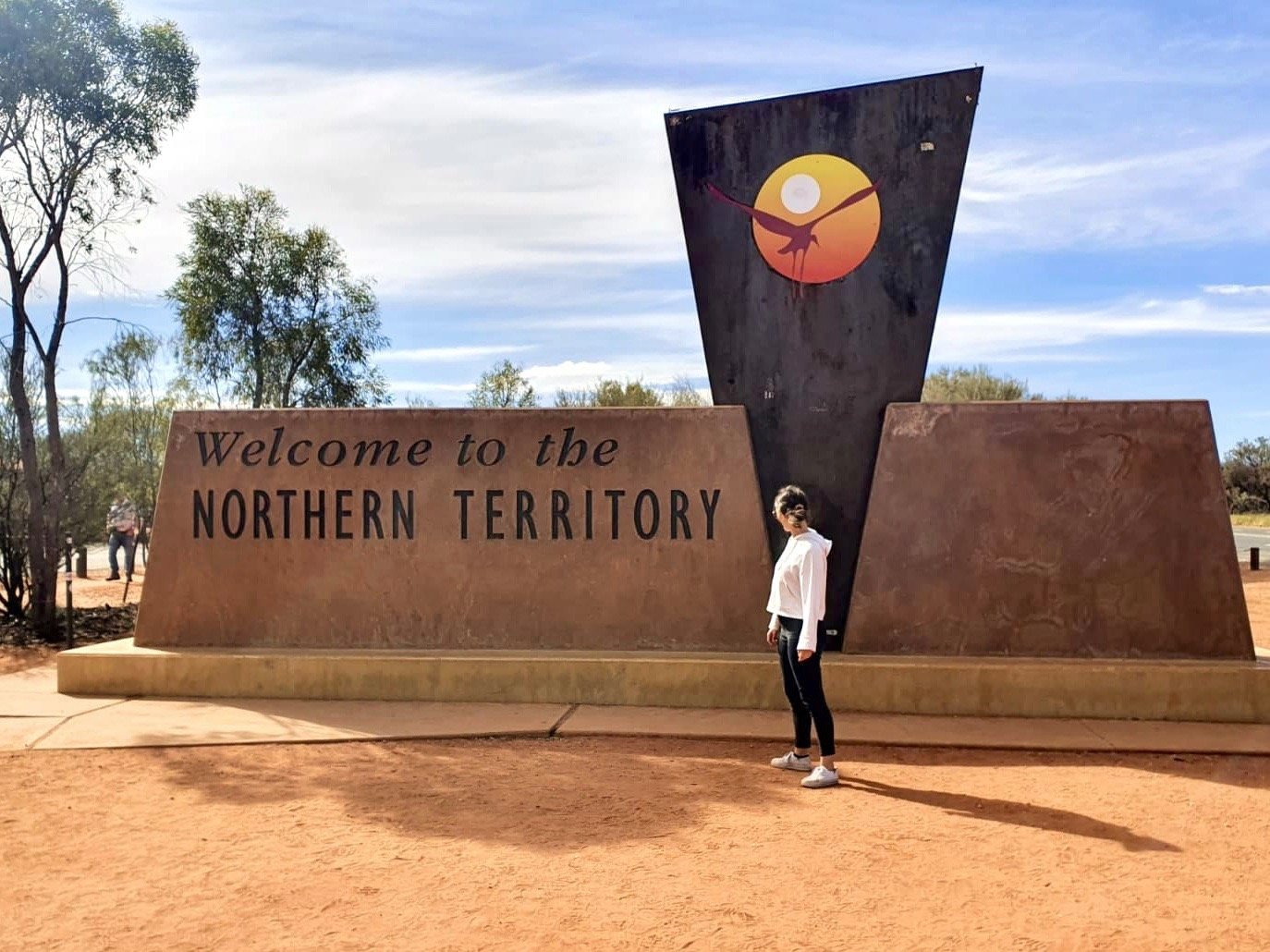
The Northern Territory–South Australia border
Where to stay: We camped at Kulgera Roadhouse, a spacious campsite next to a pub with some seriously quirky decor. We even spotted emus there — one of the typical Australian animals!
Day 4: Sunset at Uluru
Kulgera Roadhouse to Uluru ($), 504 km
Today is one of the most eagerly awaited days of the entire road trip: you’ll finally reach Uluru, or Ayers Rock, Australia’s sacred rock.
It is a sandstone monolith listed as a UNESCO World Heritage Site, thought to have started forming 550 million years ago. It rises 348 meters over the desert floor and geologists believe the rock extends at least 2.5 km deep beneath the surface, almost like a land iceberg. To the Aboriginal people, Uluru is a sacred entity created by ancestral beings during the Dreaming.
Along the way, as you get closer and gradually more excited, you’ll come across Mount Conner, also known as “Fooluru”. Don’t be fooled!
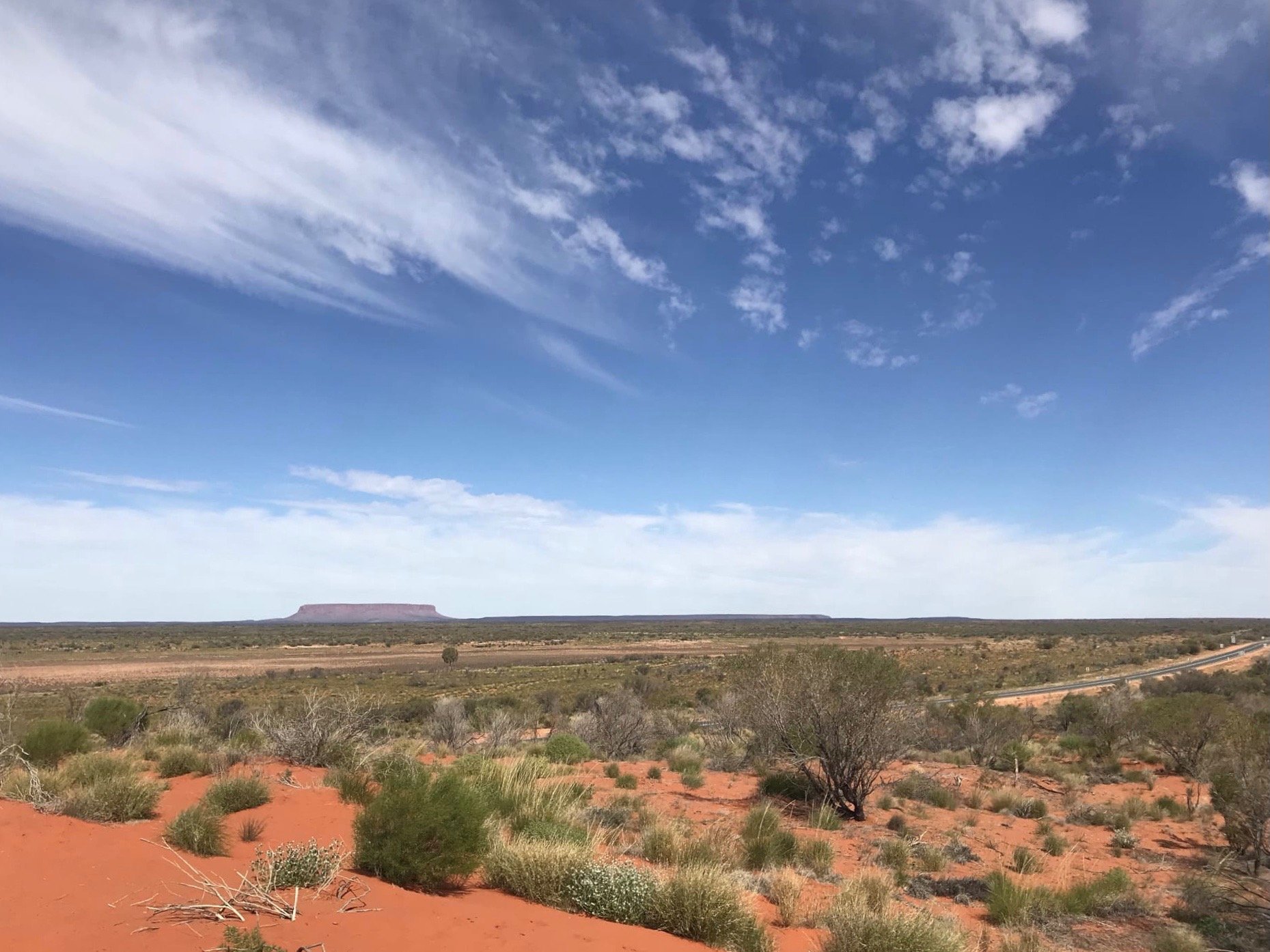
I was fooled.
Approximately 20 kilometres before getting to Uluru you'll find Yulara, a dedicated resort township that provides accommodation, restaurants and essential services for travellers. There's even a small airport right by it!
Once you’ve settled into your accommodation or campsite, head to Uluru-Kata Tjuta National Park. You’ll need a National Park pass, which costs $38 per person and is valid for three days. It can be bought online.
Things to do at Uluru:
Walk or hire a bike to cycle around the base of Uluru, a route of around 10 kilometres.
Watch the sunset: If you only have one day, I recommend watching the sunlight over the rock rather than watching the sun hiding behind it. You'll have to drive to the "Uluru Car Sunset Viewing Area" on Google Maps. It was incredible!
Watch the sunrise the next morning: go to Talinguru Nyakunytjaku to view the dramatic lighting effects on the sandstone.
Visit Field of Light, an art installation created by artist Bruce Munro that blends beautifully with the surrounding landscape. As the sun goes down, the colourful lights gradually come to life, with Uluru in the background. From $50 per adult.
Go for a walk through the Olgas (Kata Tjuta), also located within the national park (more on this on the next day).


Uluru is the world's largest single rock monolith. And yes, it's worth visiting!
Where to stay near Uluru: I recommend camping at Ayers Rock Campground so you’re closer to the main attractions. There are a few free campsites a few kilometres before reaching Yulara, but staying there means a longer drive in the dark if you want to catch sunrise and sunset at Uluru. We always avoided driving at night because of the dangers with wildlife.
Alternative Accommodation in Yulara:
Hostel-style Budget Accommodation: Outback Lodge
Modern studio-style rooms: The Lost Camel Hotel
The only rooms with a view of Uluru: Book a Deluxe Rock View Room at Desert Gardens Hotel
Day 5: Uluru Sunrise and Valley of the Winds
Uluru to Salt Creek Rest Area, 193 km
Day 5 means another early start to watch the sunrise at Uluru. Seeing Uluru change colour as the sun comes up can be a beautiful experience, but keep in mind that the main lookout usually gets pretty busy. You’ll be sharing the view with plenty of other visitors, so I mention this so you don’t build up an overly idyllic image of an Uluru sunrise and end up disappointed.
For me, the real highlight of the day was Kata Tjuta, also known as the Olgas. After watching the sunrise at Uluru, we continued straight to Kata Tjuta to do the Valley of the Winds Walk. And honestly, even though the sunrise was good, this walk was much better!
The scenery along the 7.4 km trail is incredible, and it was definitely one of my favourite hikes on our Outback road trip. Reserve 3 to 4 hours for the full circuit and wear sturdy walking shoes. You'll want to be there early in the morning, as access to the walk may close after 11 am on very hot days.
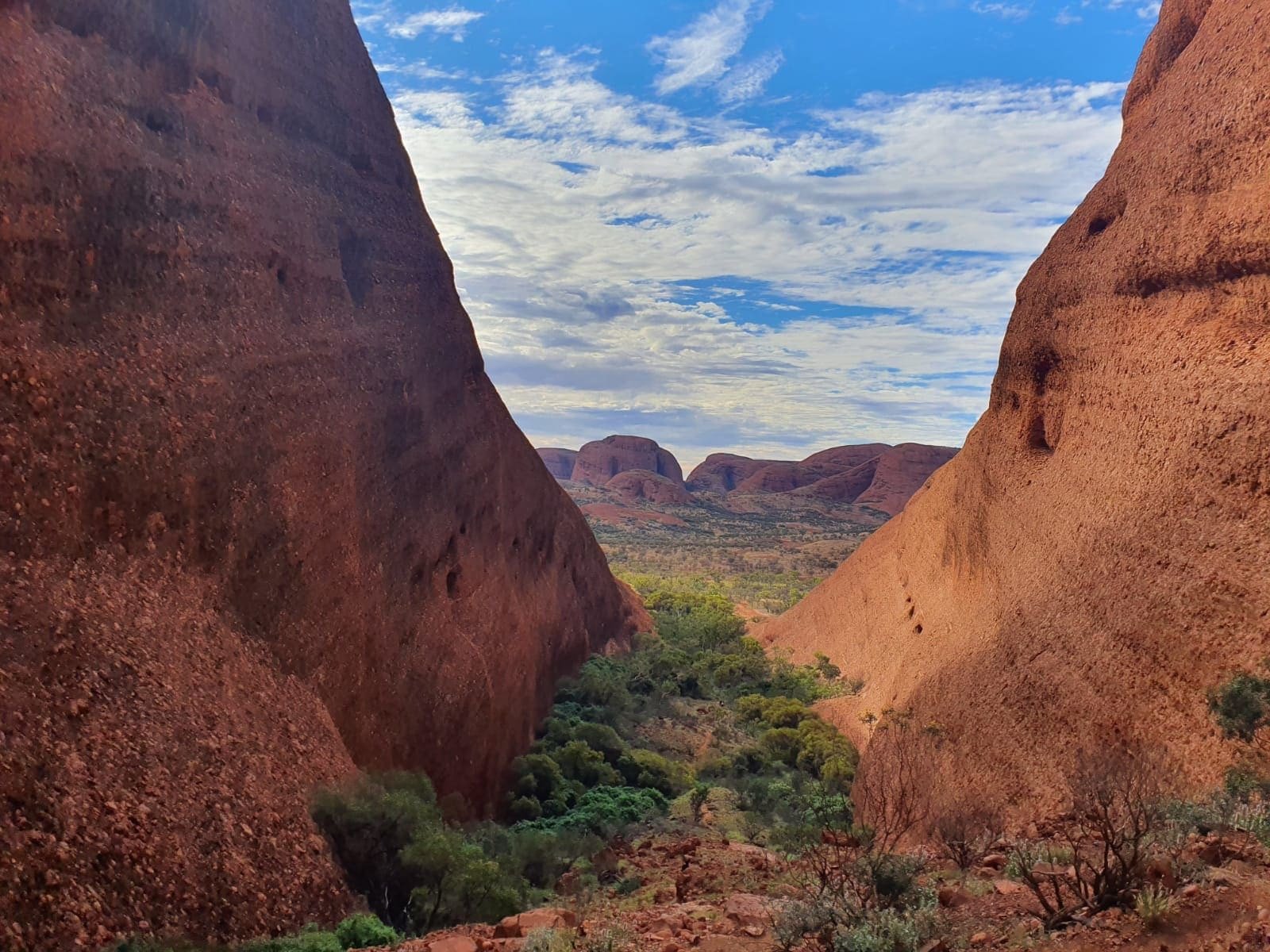
Hiking through the Valley of the Winds at Kata Tjuta
Where to stay: We camped at Salt Creek Rest Area, just outside the Ayers Rock area as we continued driving towards the Red Centre Way. We lit a small campfire and spent the evening chatting with other travellers as the sun went down.
Day 6: Kings Canyon
Salt Creek to Ridgetop Campground, 351 km
Once again, it’s an early start. The reason? A hike through Kings Canyon. The Kings Canyon Rim Walk starts with a steep climb of around 1,000 steps, so it’s definitely worth setting off early, especially if you’re visiting the Australian Outback during the warmer months.
Once you reach the top, the trail follows the rim of the canyon, climbing up and down over the rocks. The walk is around 7 kilometres long, the scenery is incredible, and I really enjoyed the whole experience. Make sure to take the detours to all the different lookouts — the views over Kings Canyon are well worth it!
Once you’ve got your exercise for the day out of the way, it’s time to get back on the road. From Kings Canyon, you have two main options for continuing towards Alice Springs.
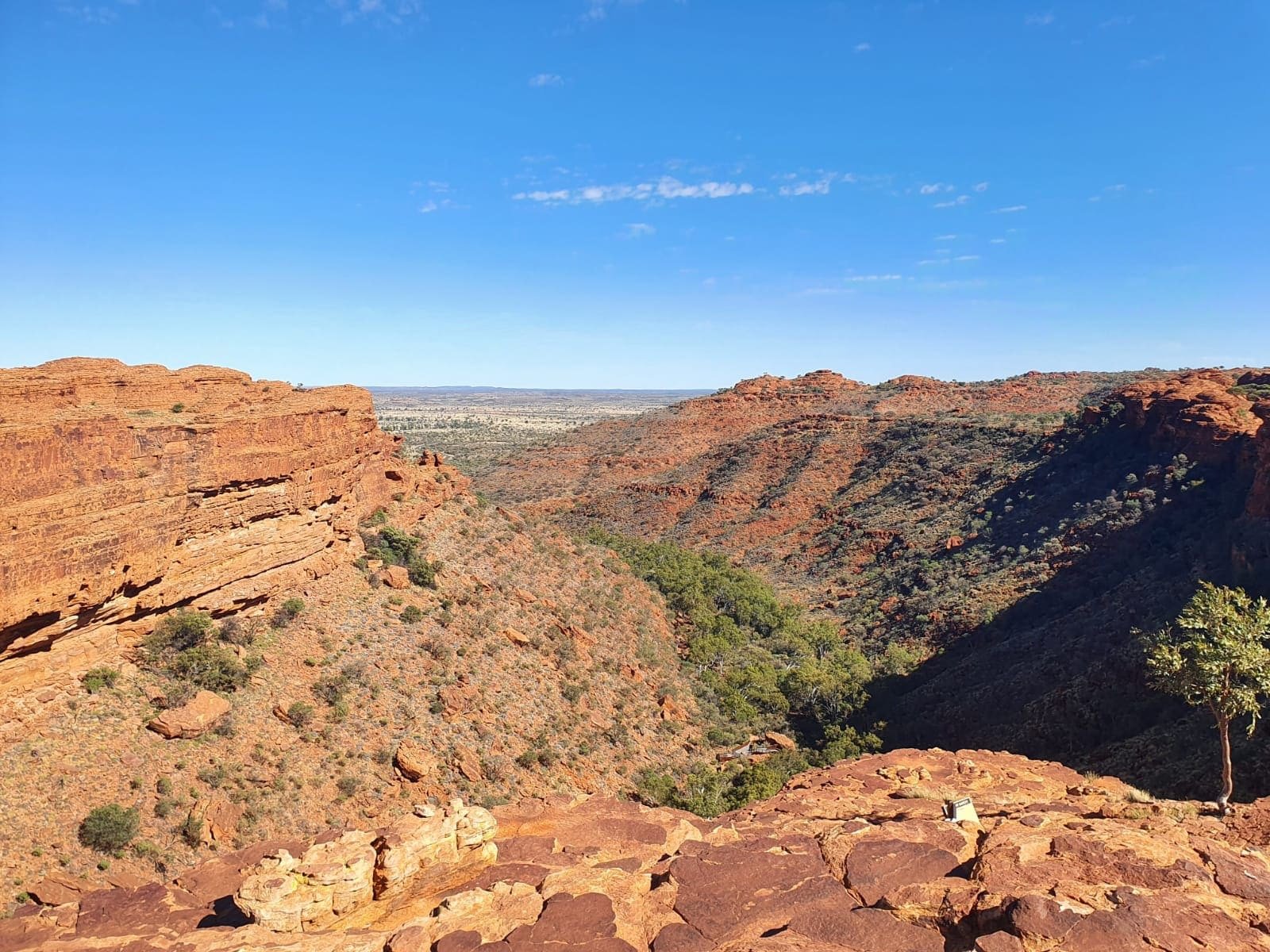
Views from the top of Kings Canyon, Watarrka National Park
The more adventurous option is to take the Red Centre Way via the Mereenie Loop. This route takes you through the West MacDonnell Ranges, but there’s a long stretch of unsealed, corrugated road. A 4WD is recommended, and road conditions can change, so make sure to check them before setting off.
If you don’t have a 4WD or simply don’t fancy several hours on corrugated dirt roads, you can take the easier option: drive back towards Uluru and then continue east along the sealed roads towards Alice Springs. It’s a longer route, but it avoids the unsealed Red Centre Way.
We chose the Red Centre Way, and although the drive was long and bumpy, the scenery was absolutely beautiful. It was one of my favourite parts of the Outback adventure!
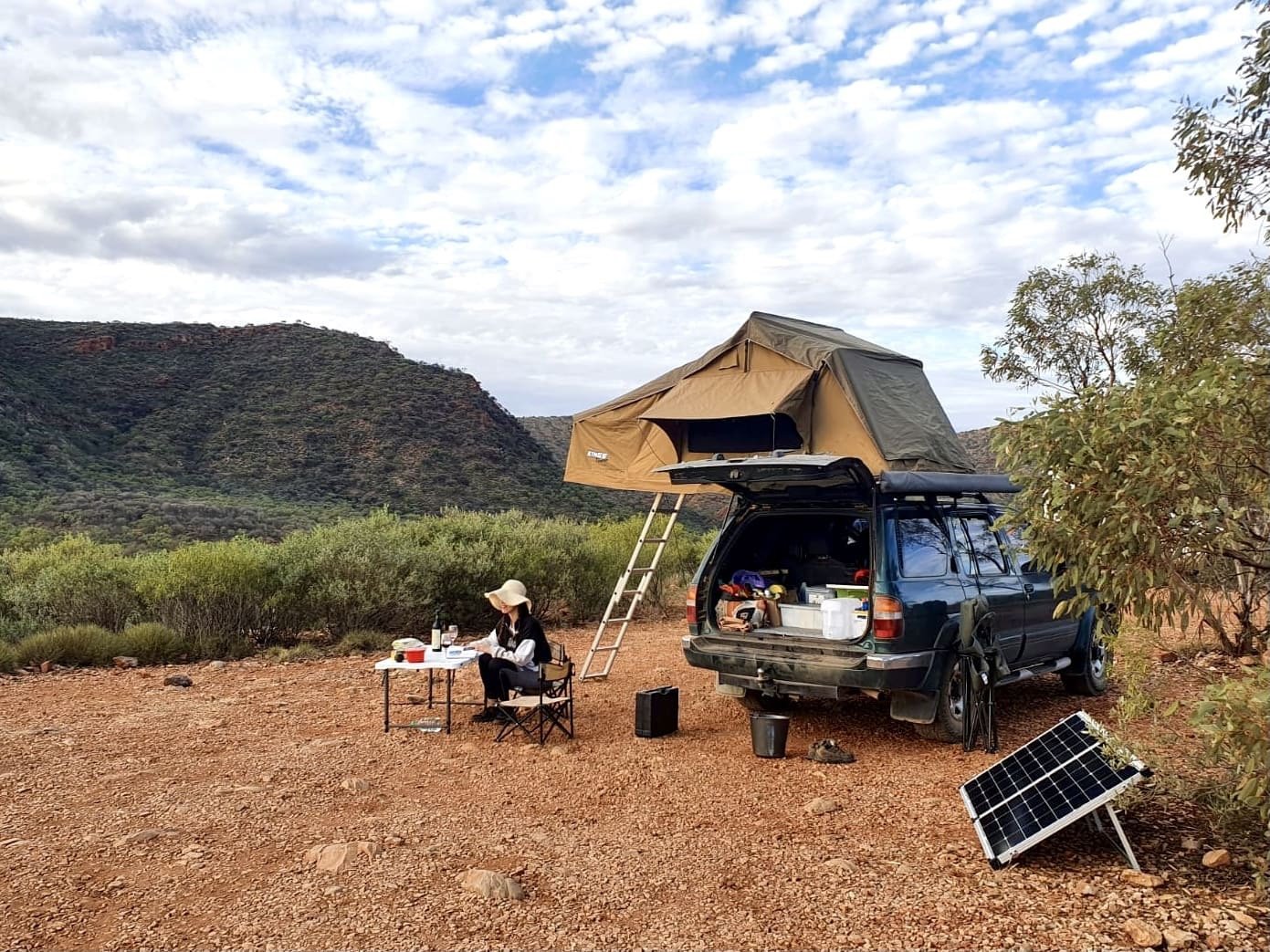
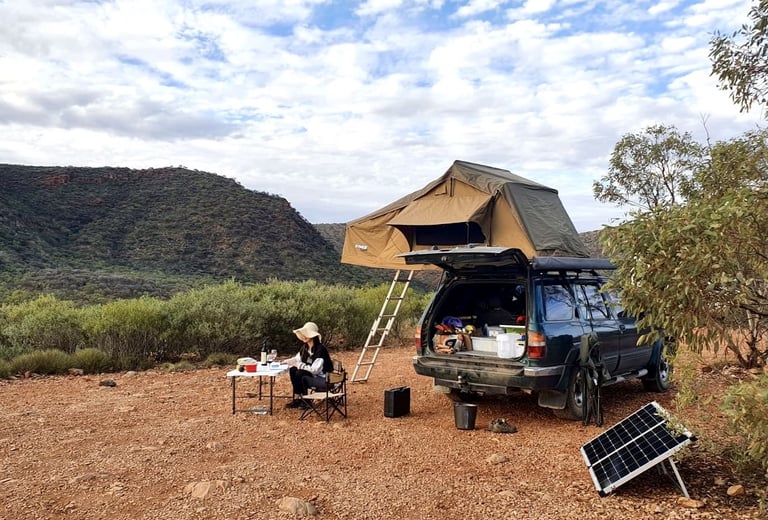
Ready to watch the sunset from Ridgetop Campground
Where to camp: Ridgetop Redbank Gorge Campground, with fantastic views over the canyon and a beautiful sunset.
Day 7: West MacDonnell and Alice Springs
Ridgetop Campground to Alice Springs ($), 169 km
Between Redbank Gorge and Alice Springs lie the West MacDonnell Ranges, home to some of the most beautiful gorges and waterholes in Central Australia. It’s a great place to stop for a swim and cool off after several days of driving through the dry Outback.
We started the day at Redbank Gorge, which you can access directly from the campground. Then you can continue along the road to places such as Glen Helen Gorge, Ormiston Gorge and Ellery Creek Big Hole. The latter two are particularly good options if you fancy a swim!
Around 40 minutes before reaching Alice Springs, you’ll find Standley Chasm or Angkerle, a spectacular natural gorge and an important cultural site for the Western Arrernte people. The site is Aboriginal-owned and operated, and you can explore the chasm on a short self-guided walk with an entrance fee.
Check the opening hours and current entry fees before visiting on the official Standley Chasm website, as these can change.
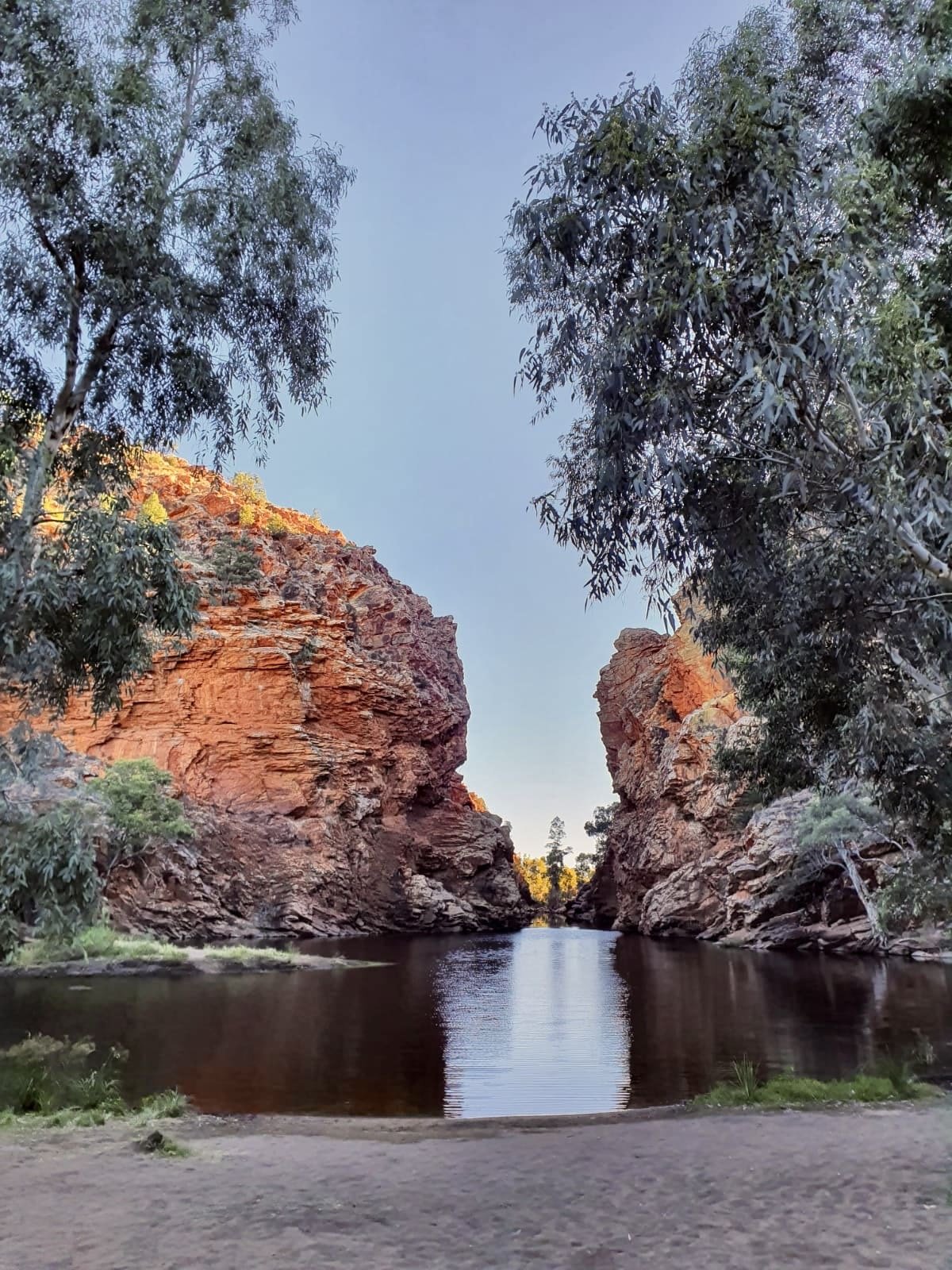
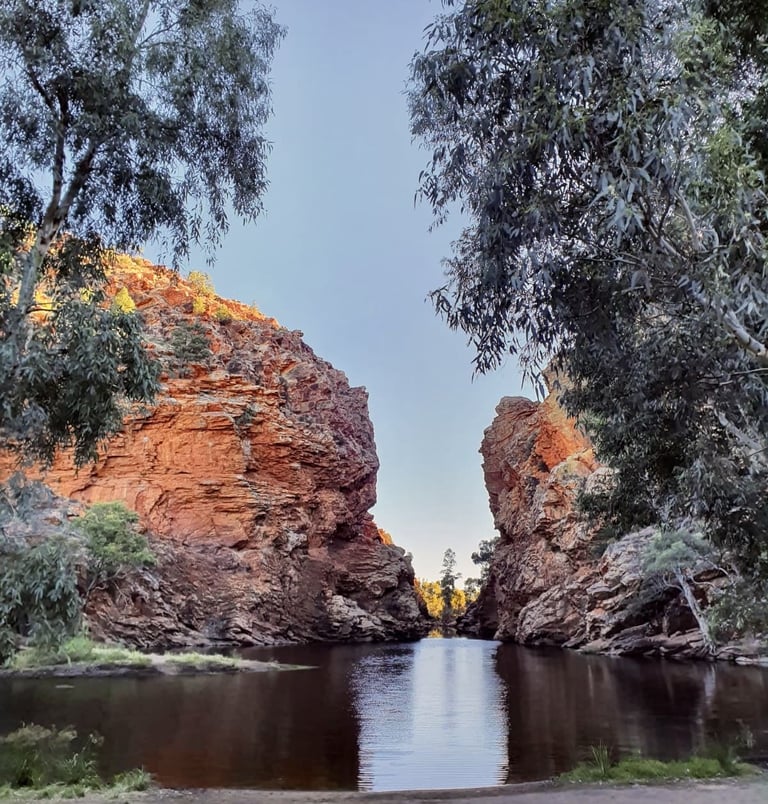
Swimming spots in West MacDonnell National Park
Where to stay in Alice Springs: If you’re camping in Alice Springs, I’d recommend choosing a private campground with secure fencing and on-site security. We preferred not to leave our car parked on the street, even when popping into the supermarket, as we’d been warned about thefts in the area.
We stayed at Alice Springs Tourist Park, which was a convenient option in town with a free shuttle to the pub.


Alice Springs sits almost exactly halfway between Adelaide and Darwin.
This is where I’ve cheated a little with this itinerary: I actually spent three nights in Alice Springs to take a few days off, do some laundry, watch Eurovision… and I haven’t included those days in the itinerary! If you want to do the same, Alice Springs is a great place to take a break, as you’ll have all the amenities and facilities you need.
What To Do Around Alice Springs
If you have a few extra days for your roadtrip, I’d complete the itinerary heading out to the East MacDonnell Ranges. They’re often overlooked in favour of the West Macs, but there are plenty of beautiful landscapes, gorges and Aboriginal cultural sites to explore along the way. If you’re not in a rush and want to see a different side of the Red Centre, yes, go for it!
There's another experience I now wish I'd done, which is a hot air balloon flight over the Outback from Alice Springs. I didn’t even know you could do that, but a traveller I recently met told me all about his experience. And it sounded incredible!
Floating over the desert at sunrise must be an insane way to experience the Outback, and they even spotted dingoes and other wildlife roaming below. It's definitely on my bucket list!
Day 8: Devil’s Marbles
Alice Springs to Attack Creek, 591 km
This is one of those stops that gets recommended because, quite simply, there’s nothing else around. For roughly 400 kilometres in any direction, there’s nothing to see or do (and I’m not exaggerating!). We spent pretty much the entire day in the car and, surprisingly, it ended up being one of my favourite days of the whole Outback road trip.
There’s something special about driving through the middle of nowhere, with an almost completely empty road stretching out in front of you, the sun shining, a coffee in hand and your favourite music playing. No rush, no traffic, nowhere else to be… just loving life!
Eventually, you’ll reach Devil’s Marbles, one of the most unusual natural attractions in the Northern Territory. Suddenly, in the middle of this vast Outback landscape, you’ll find enormous rounded granite boulders seemingly balanced on top of one another — hence the name “Devil’s Marbles”. It’s a pretty surreal sight and definitely worth stopping for a wander around.
It would have been an even more enjoyable stop if it hadn’t been for the flies, which absolutely tortured us. Welcome to the Australian Outback!
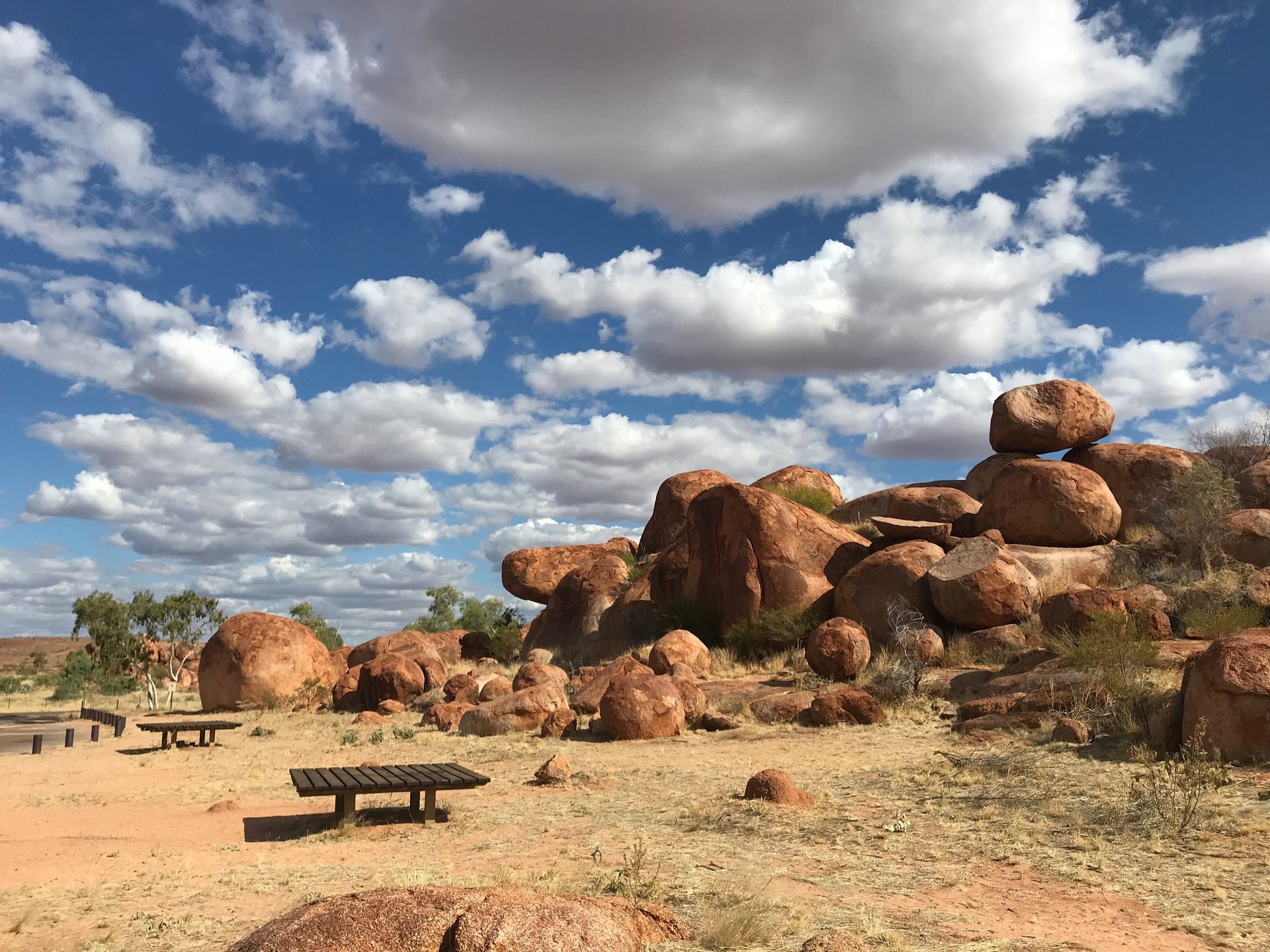
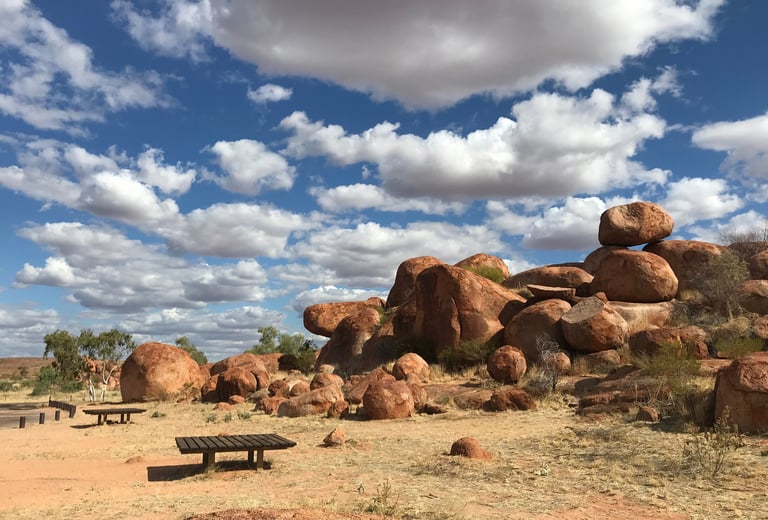
Devil’s Marbles in the middle of the Australian Outback
Where to stay: We camped at a roadside rest area, Attack Creek Rest Area. By this point, we could really feel the nights getting noticeably warmer.
Day 9: The best custard slice in Australia, Daly Waters Pub and Mataranka Hot Springs
Attack Creek to Elsey National Park ($), 524 km
Another day of covering plenty of kilometres with not too many distractions along the way, although there’s something quite enjoyable about watching the landscape gradually change as you head further north. Around this part of the Northern Territory Outback, the roadside is dotted with countless small mounds built by termites, giving the landscape an almost cemetery-like appearance.
But the most important stop of the day? Dunmarra Wayside Inn, also known as Dunmarra Roadhouse, where you absolutely have to try their famous custard slice. It was the best one I've tried in Australia! And after all those kilometres of driving, it was exactly the kind of reward we needed.
If you keep driving for another 52 kilometres, you’ll reach another iconic Outback stop: Daly Waters Pub. It’s one of those wonderfully quirky Australian pubs that has become a destination in its own right, and it’s also a good place to spend the night if it fits into your itinerary.


The iconic Daly Waters Pub deserves a stop


From here, we continued north towards Mataranka and Elsey National Park, where a very different kind of Outback experience was waiting for us: if you arrive in Mataranka early enough, head straight to the hot springs!
Where to stay: There are several campgrounds around the hot springs. We chose 12 Mile Yards and Jalmurak Campground.
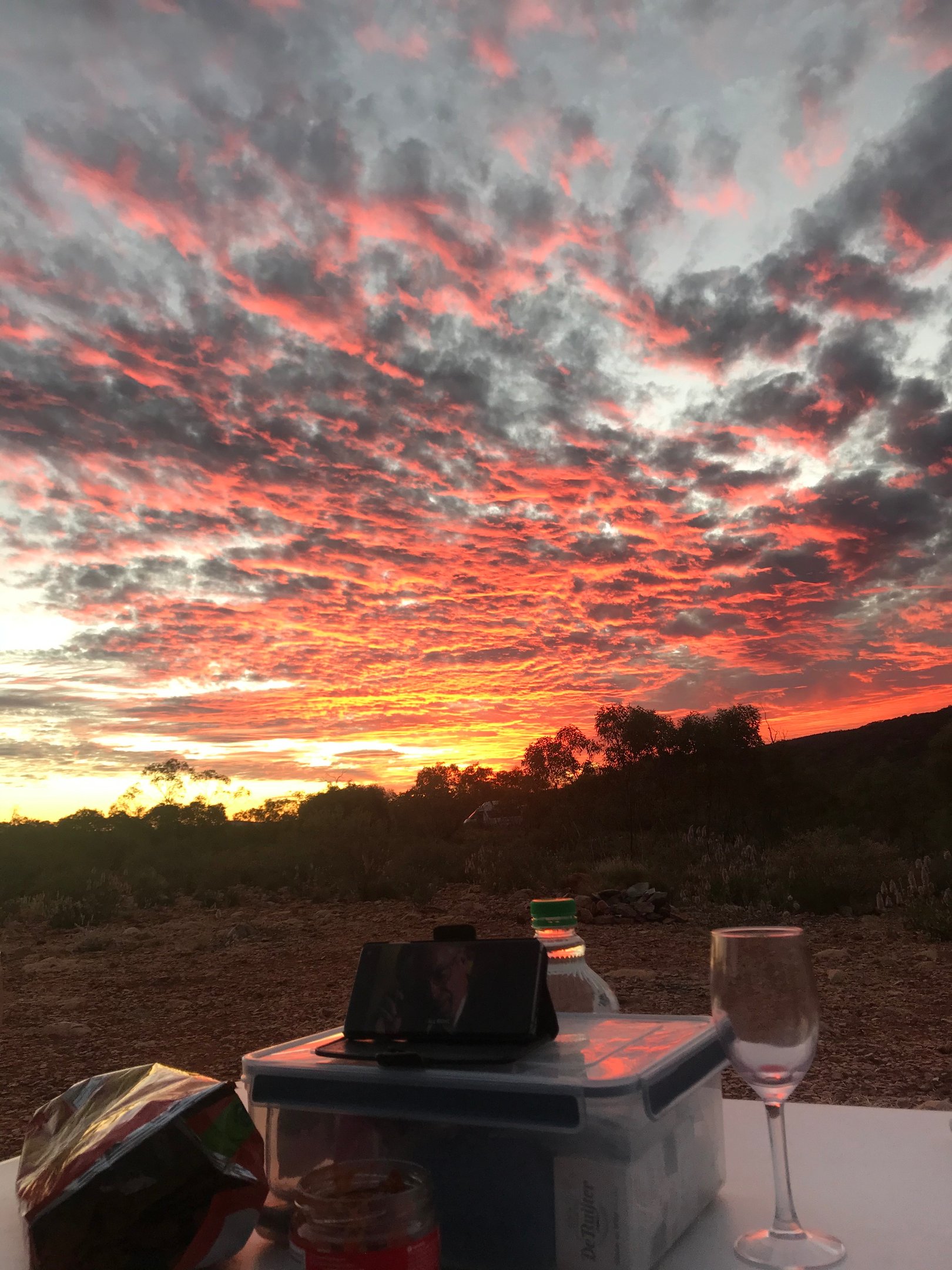
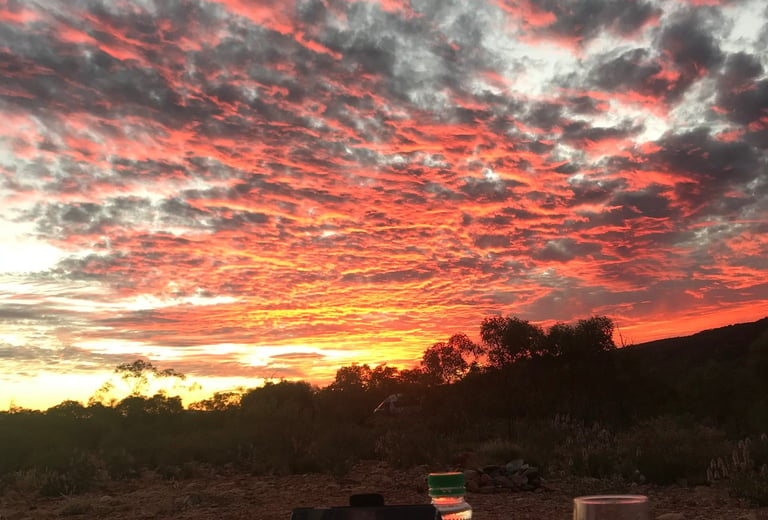
Sunsets in Northern Territory
Day 10: Katherine
Elsey National Park to Edith River Campground, 163 km
In the morning, we set off from the campground on an 8-kilometre hike to Mataranka Falls. To be honest, this was probably the most disappointing stop of the trip. The walk itself was pleasant enough, following the river as we kept an eye out for crocodiles along the way, but when we finally reached the falls, the waterfall was less than a metre high! Definitely not quite what we had imagined.
On the way back, we stopped for another swim in the crystal-clear waters of Mataranka before continuing north towards Katherine, our next stop. And there’s another bonus waiting for you there: more hot springs! After spending so many days on the road, there’s really no better excuse to take another dip and relax.
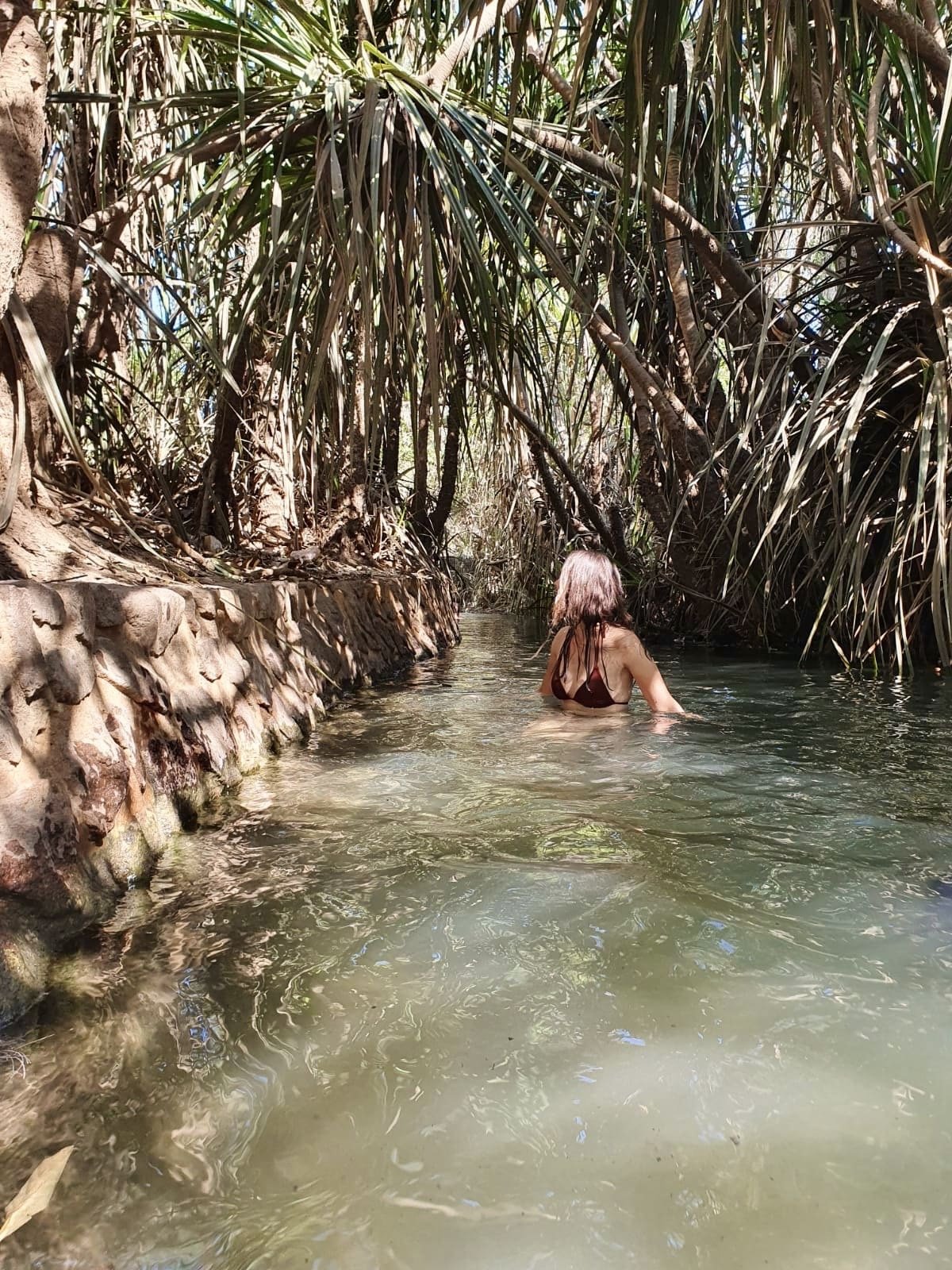
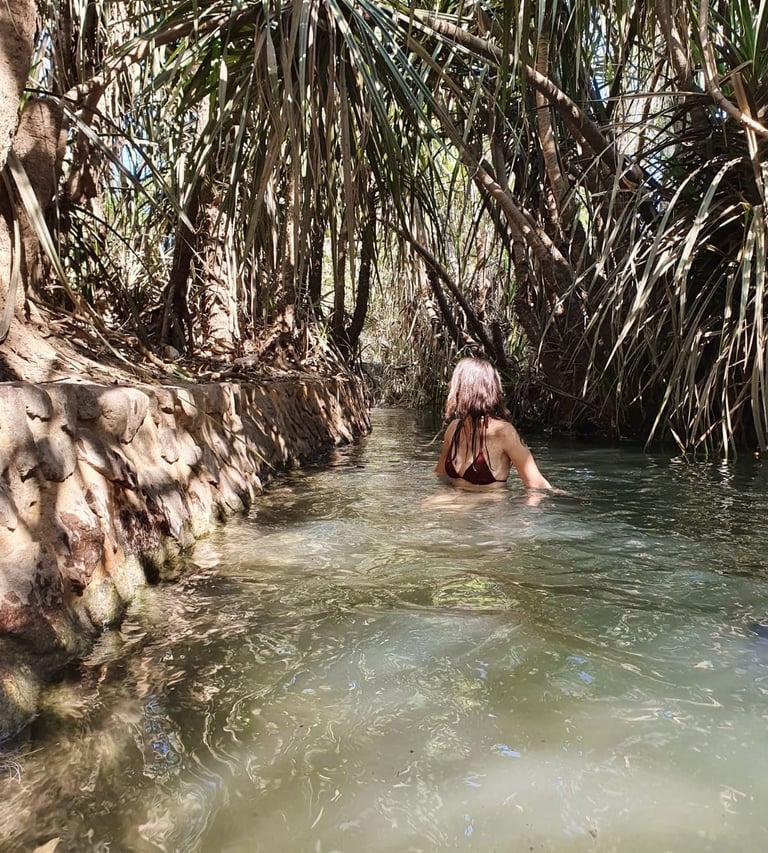
Katherine hot springs
If you have some extra time in Katherine, another great option between May and September is to hire a kayak and paddle through the 13 gorges of Nitmiluk Gorge. You can choose how long you want to spend on the water, and if you want to reach the more remote gorges, you can even camp overnight along the way.
I actually did this on another occasion, paddling as far as the third gorge. The scenery is absolutely beautiful, but be prepared to put in some work — there’s a lot of paddling involved!
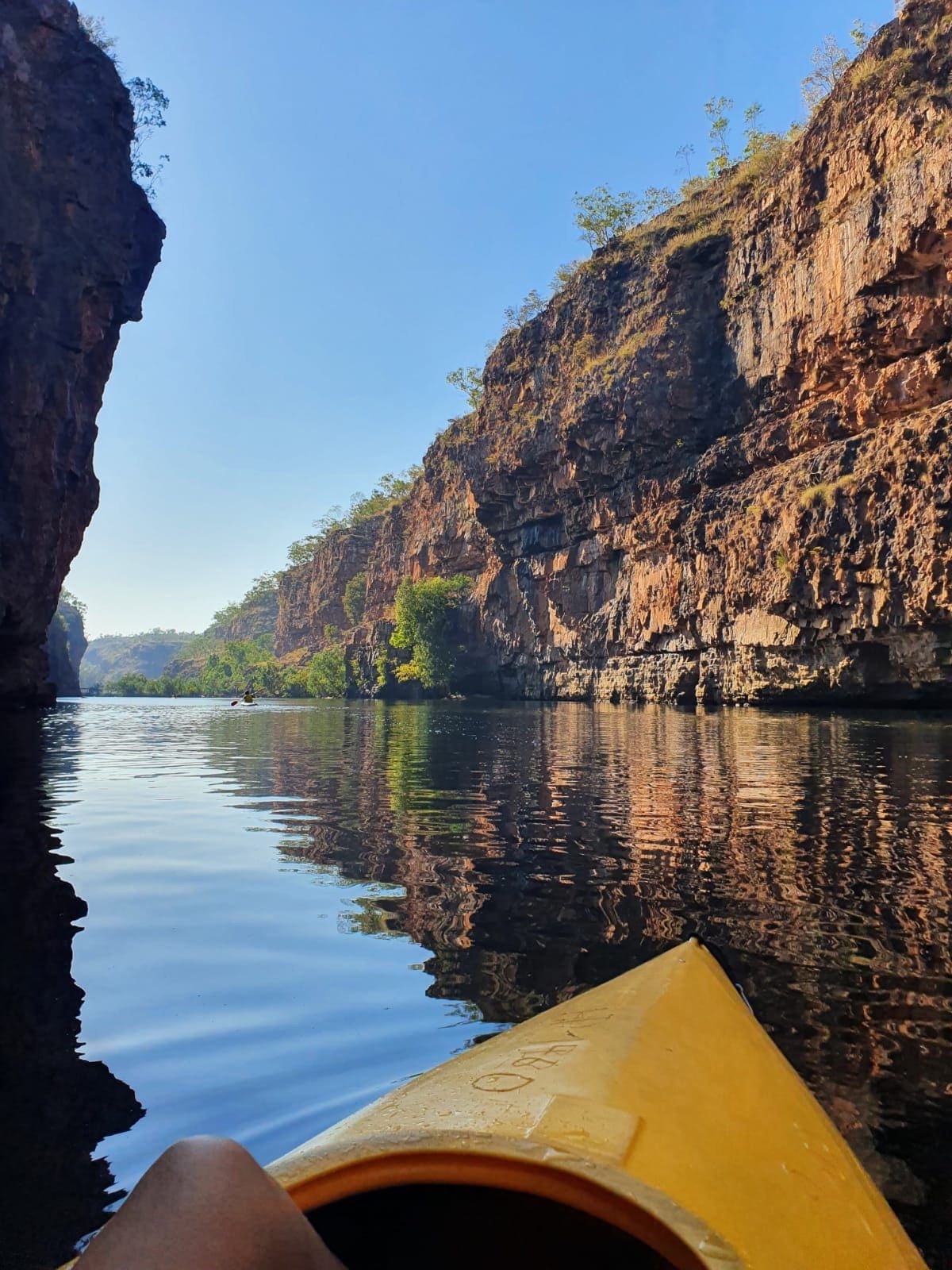
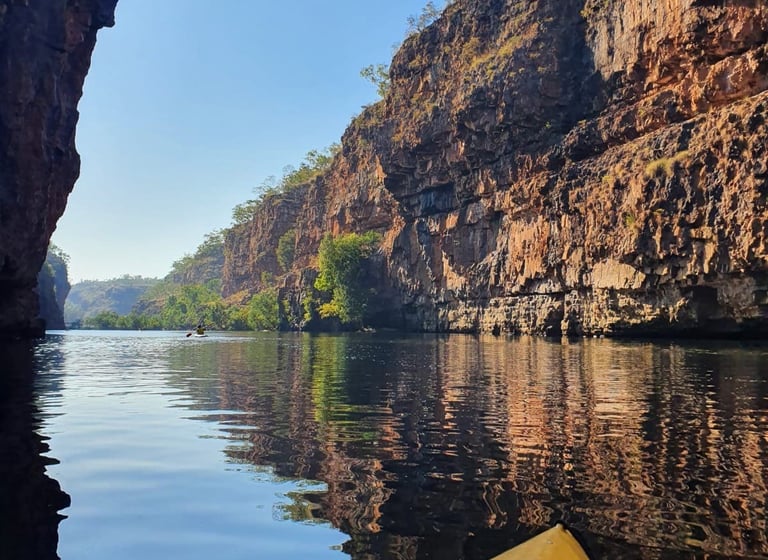
Kayaking through the gorgeous Nitmiluk Gorge
Where to camp in Katherine: We camped at Edith River Campground, just past Katherine. It’s a fairly rough and uneven free campsite near a river where crocodiles may be present, so keep this in mind when choosing where to set up camp.
Day 11: Darwin City!
Edith River to Darwin, 306 km
Arriving in Darwin after such a huge road trip feels like a real achievement. Suddenly, you’re surrounded by tropical weather, people are on holiday, and hostels are full of pool parties… Darwin is all about enjoying yourself and taking a well-deserved break!
Where to stay in Darwin: I stayed at the MOM Darwin, right in the heart of Mitchell Street, Darwin’s entertainment strip. It was a great option if you’re looking for a lively backpacker atmosphere, with swimming pools, a bar and plenty of places to hang out. The location is particularly convenient if you want to head out for a few drinks or explore Darwin’s nightlife.
That said, this is definitely a party hostel. When I was there, the atmosphere was very much geared towards English backpackers — great for a few days and meeting people, but personally, I wouldn’t want to stay there for too long. If you’re looking for somewhere quiet, relaxing or private, I’d choose a different type of accommodation.
And finally, a very important recommendation: the best gelato in Darwin is on the same street, at La Granita. Give it a try and let me know whether you agree!
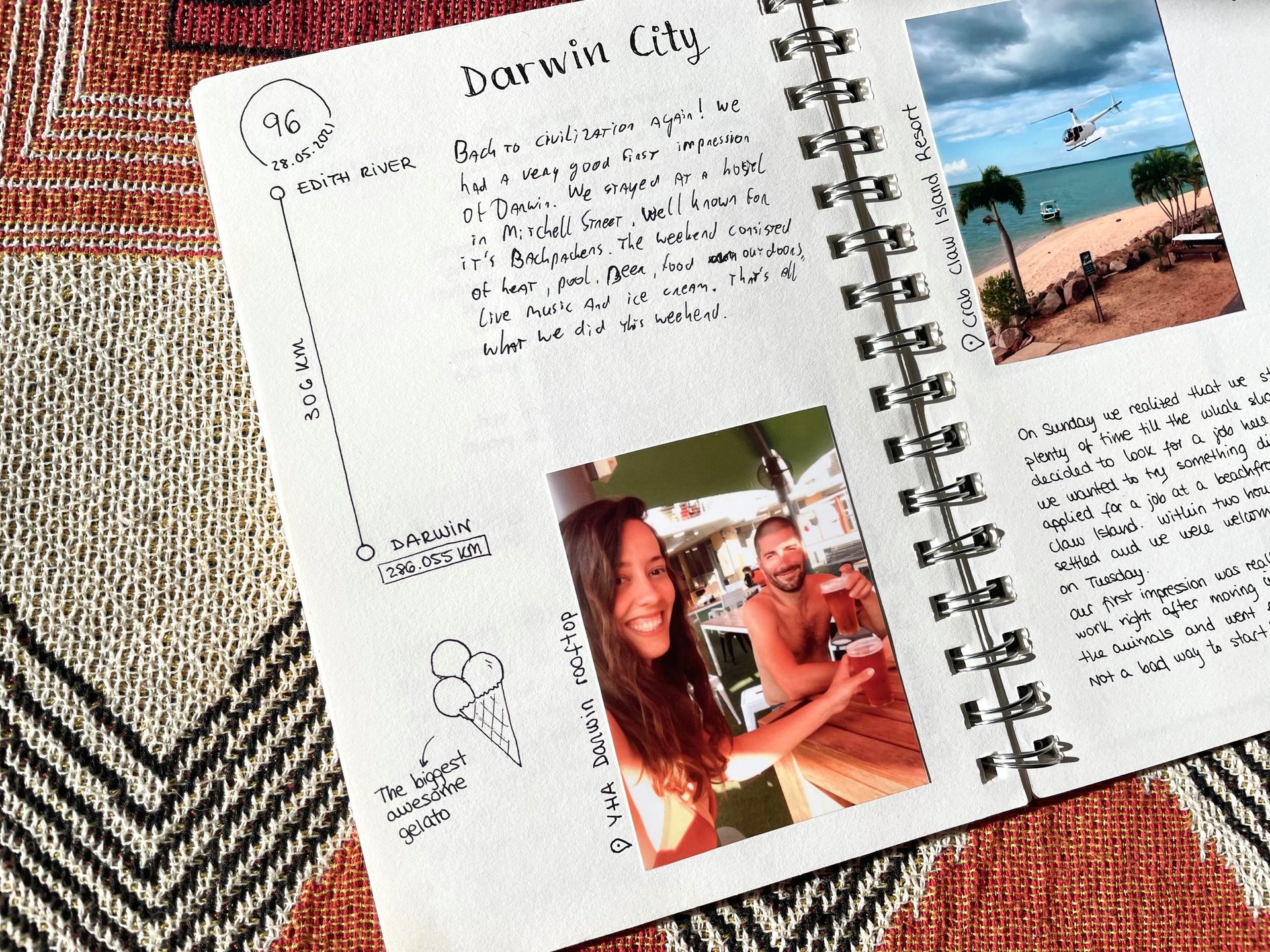
Celebrating our arrival in Darwin! A page from my Australia travel journal
AUSTRALIAN OUTBACK ROAD TRIP MAP
You can save this map to your Google Maps so you’ll have it handy during your Outback road trip. It includes all the campsites, places to stay and points of interest mentioned in this itinerary.
If you open the map, you’ll also find additional layers showing fuel stations and the different stages of the road trip, making it easier to plan your route and keep track of your journey.
EXTRA TIPS FOR YOUR AUSTRALIAN OUTBACK ROAD TRIP
Keep an eye on your fuel range. If your car doesn’t have a particularly large fuel tank, fill up whenever you come across a petrol station. Keep in mind that remote petrol stations can occasionally run out of fuel.
Compare fuel prices at the different petrol stations along your route, as there can be surprisingly big differences between them. I used the FuelMapAustralia app and Google Maps to keep track of prices. I made a list of all the petrol stations we were going to pass, in order, along with their prices and the distances between them. By filling up completely only at the cheaper stations, we managed to save quite a bit of money.
One piece of advice we were given by some Australians who helped us with our car in Adelaide was to be cautious about stopping for strangers on remote roads. Their advice was never to stop, even if we felt bad about driving past, and it’s something we kept in mind throughout our road trip.
As always in Australia, avoid driving after sunset, as wildlife is much more active at night. This is particularly important in remote areas, where kangaroos and other animals can suddenly appear on the road.
BUDGET FOR A 13-DAY ADELAIDE TO DARWIN 4WD ROADTRIP
Here’s what I spent on my Australian Outback road trip, which I think is pretty reasonable for 13 days and more than 4,000 kilometres. There were two of us travelling in a 4WD with a rooftop tent, which kept our accommodation costs relatively low.
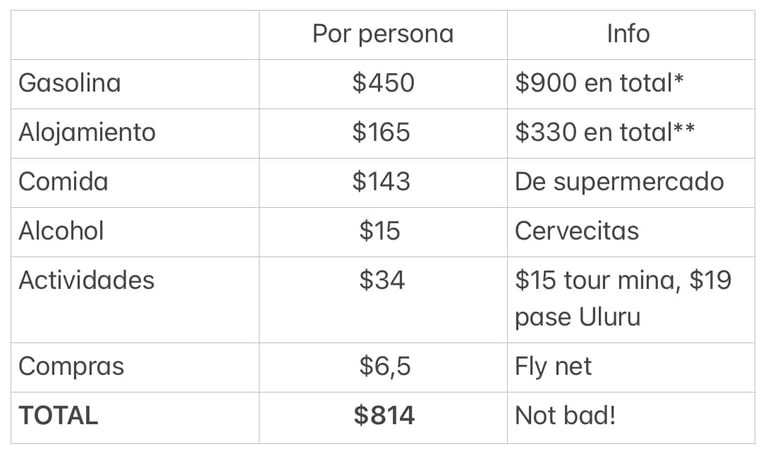
13-day Australian Outback road trip budget in Australian dollars
*The fuel prices are from before fuel prices went up.
**Accommodation: This includes 5 nights at free campsites, 7 nights at paid campgrounds, and 1 night in an underground hotel in Coober Pedy, which cost $45 per person.
DOWNLOAD YOUR OUTBACK ROADTRIP BUCKET LIST
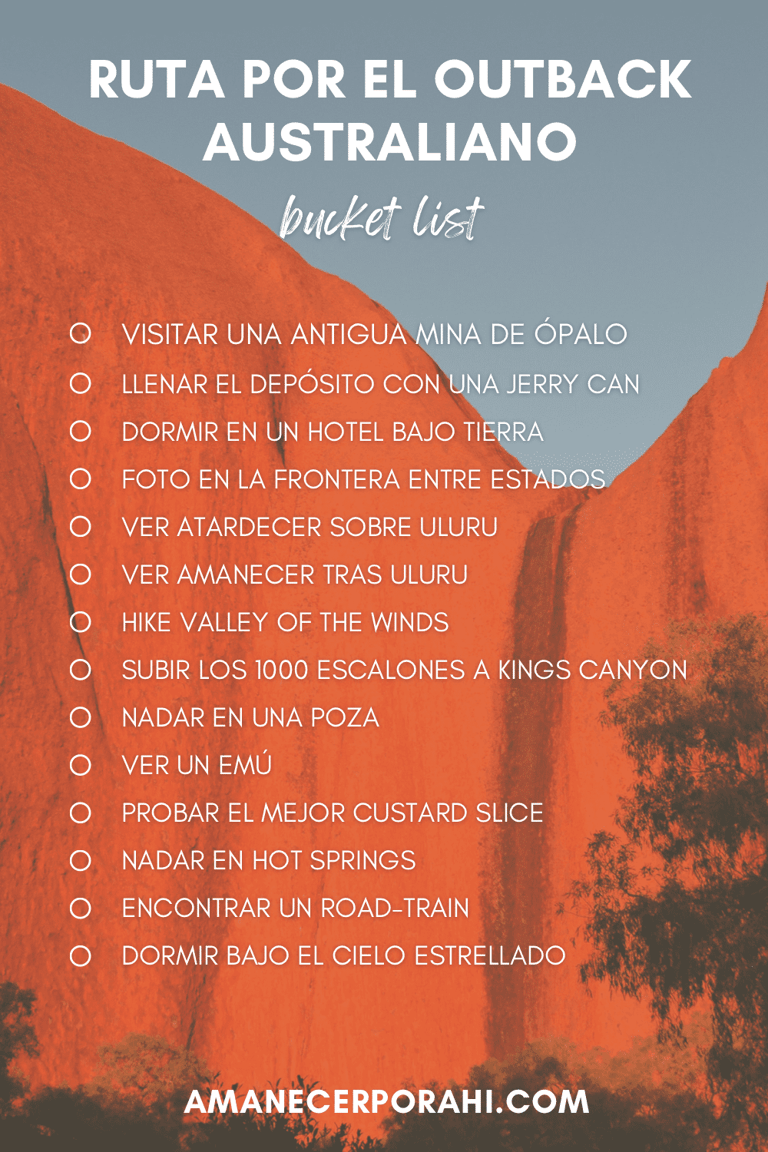
And that’s the end of this Australian Outback road trip itinerary! Could you do it in less time? Yes, definitely. But that would mean covering a lot of kilometres every day.
This itinerary is a relatively relaxed way of doing the trip, and even so, there are several days involving some pretty intense driving. That’s why I highly recommend having more than one driver in your group. (Take it from someone who got their driving licence in a small town in Victoria just a few days before starting this road trip and basically learned to drive in the middle of the Australian desert. But that’s a story for another day!)
One more thing: between Katherine and Darwin, there are two major national parks that I haven’t included in this itinerary: Kakadu National Park and Litchfield National Park. We were planning to stay and work in the Darwin area, so we decided to save them for later. If you're trying to decide if they are worth it, definitely yes! Don't miss the opportunity to visit them!
So, are you ready to hit the road? Grab your 4WD, download the Outback road trip map, and get ready for 4,000+ kilometres of red dirt, endless roads and unforgettable landscapes. The Australian Outback is waiting for you!
See you out there!


Plan your trip around Australia
If you book your trips using these links, you get to enjoy some discounts and I may receive a small commission to keep updating the content on this blog. Cheers!
FLIGHTS - the cheapest combinations.
TRAVEL INSURANCE with 5% off.
NOMAD INSURANCE for long term travel and Working Holidays.
ESIM FROM $4,50 and get $3 off.
FREE WISE TRAVEL CARD for money transfers and minimal fees abroad.
ACTIVITIES in Australia.
RENT A CAR in Australia.
CAMPERMATE - free app to find campsites, public toilets, trekkings...
STUDENT VISA in Australia.
Recommended for you

© 2022 AMANECER POR AHÍ | Terms of use | Cookies policy | Privacy policy
hello@amanecerporahi.com